
In conversation with Matt Bishop, Racing Pride Founder Ambassador
As part of our LGBTQ+ History Month series, we are profiling and celebrating LGBTQ+ trailblazers from the paddock, past and present. Sophie Clare spoke with one of Racing Pride’s Founder Ambassadors, Matt Bishop, to learn more about his motorsport journey.
Matt started his media career as an automotive journalist for Car Magazine. He was eager to cover motorsport as well as road cars, and thanks to his editor Gavin Green (who had raced in Formula Ford in Australia) he was able to begin covering motorsport events including Formula 1. So, around the early 90s, Matt began frequenting the Formula 1 paddock. A few years later, Matt was approached to launch a new magazine, F1Racing, as its editor. Here he spent 11 years, attending almost every race and expanding the publication from English language coverage in the UK, to reporting in 34 languages in 110 countries.
Matt describes how he was known as “the only gay in the F1 village” — at least, the only person who was ‘out’. Although he did not find other openly LGBTQ+ people around him, and although the F1 paddock was not generally a particularly progressive place in those days, “that was mostly no problem to me at all, partly because most homophobes are also cowards, so if they were going to say anything negative, they said it behind my back.”
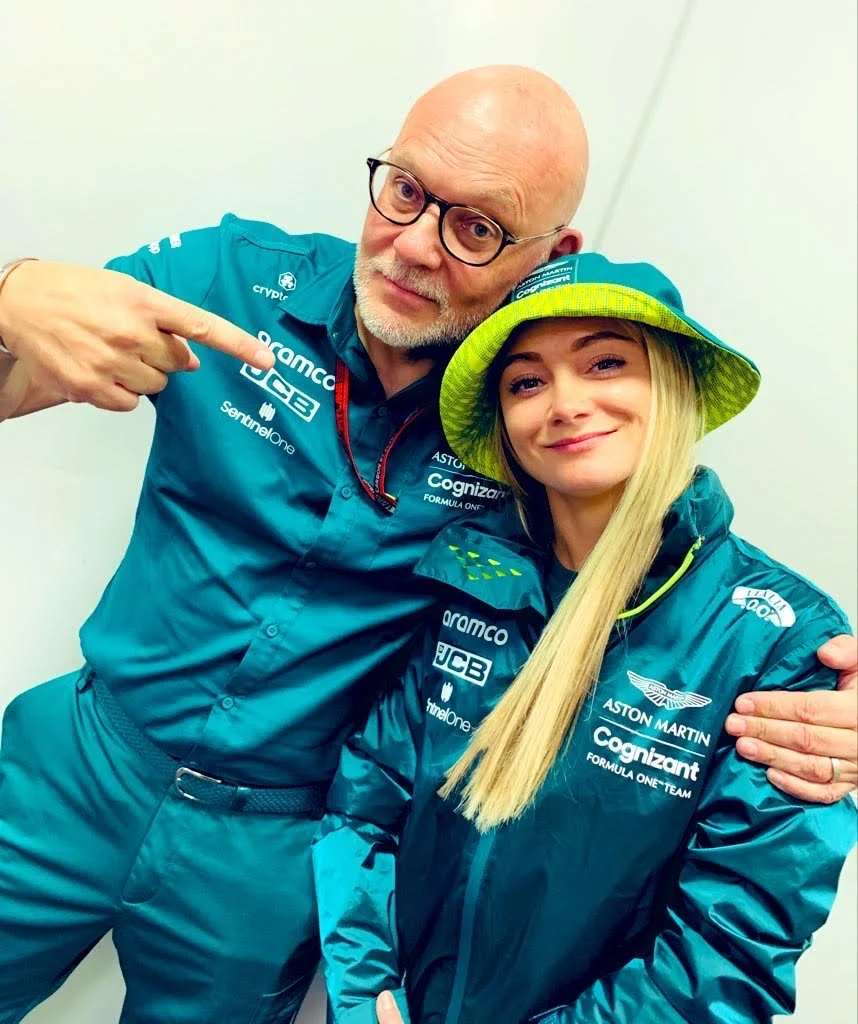
Matt Bishop with Jessica Hawkins in 2022
Soon, though, Matt began to receive anonymous emails from people working across the paddock who were in the closet and felt unable to come out. They asked for advice, leading Matt to become a private confidant for several gay male peers. He notes that generally, those who faced the most challenges to come out were mechanics and engineers, who may have been living completely openly — living with partners, out to their families, neighbours and even their partners’ workplace — but still in the closet in their motorsport career.
“Having to live that double life was a problem. We gradually began to work around how that might be […] you shouldn’t try to force somebody to come out, but if they think they want to come out, it can be a very beautiful thing to help them if they are ready and in a safe enough place where they can do it.”
After his tenure in journalism, Matt pivoted to the world of strategic communications. First at McLaren, followed by a move to the all-female W Series. It was at this stage of his career, in 2019, that Matt became a Founder Ambassador of Racing Pride.
After a meeting in a pub in Victoria, London, Racing Pride took off — launched with support from Stonewall UK in 2019. One driving principle of Racing Pride was to provide advice and counsel to people in motorsport who, for various reasons, have felt unable to come out. Over the years this has built into a community of out and proud members and their allies, providing openly LGBTQ+ role models working in roles across motorsport and associated industries.
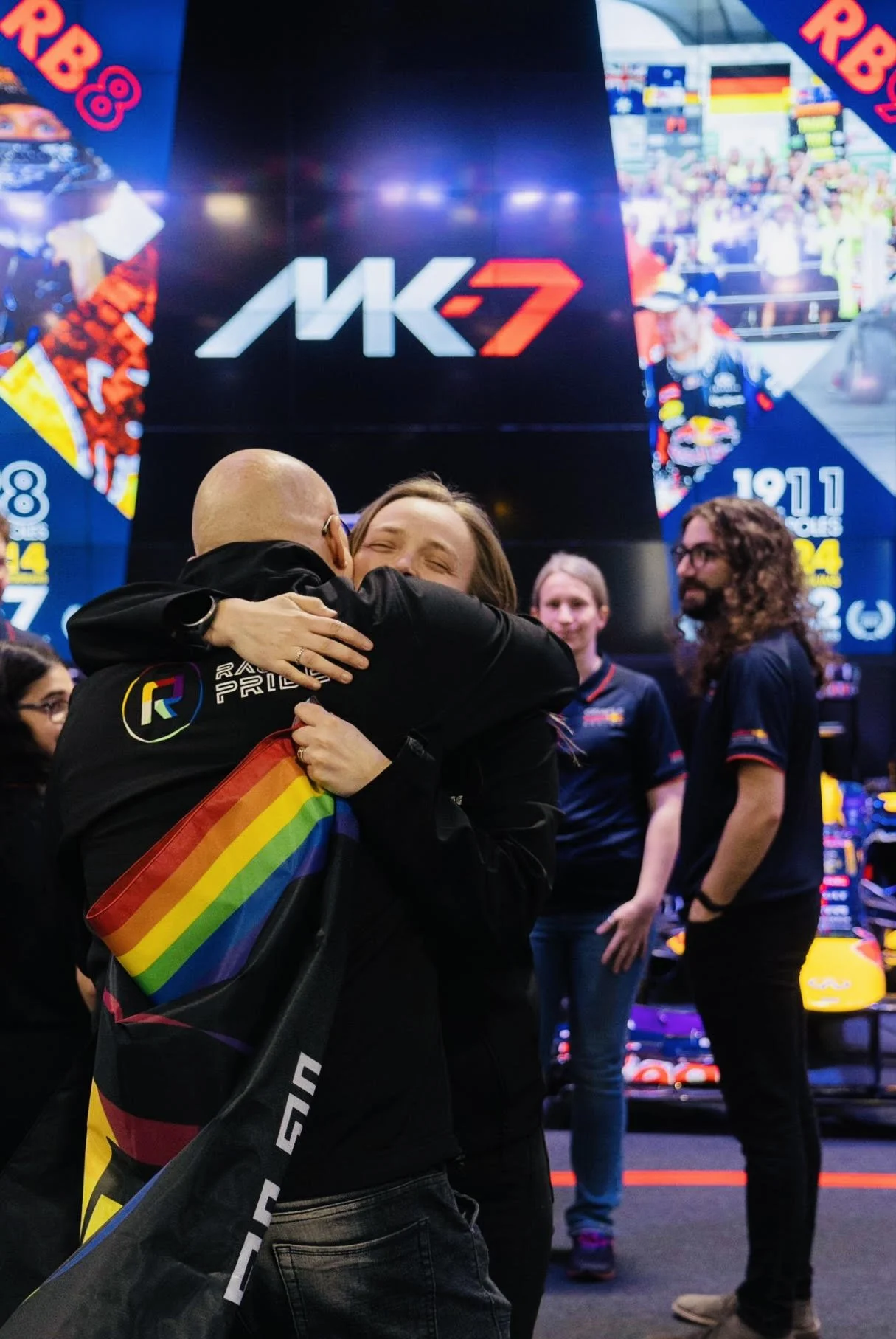
Matt Bishop hugs Sarah Moore in 2023
Taking the message of Racing Pride to senior leadership, including team principals and DEI leads, has also been a significant factor. In a sport where performance is critical, achieving a fraction of a second in pace requires the highest level of human performance as well as technical. To get the best from people, they need to feel relaxed, comfortable and welcome at work:
“I know for an absolute 24 karat fact that you have mechanics and engineers who are distracted and made uncomfortable in their work, by the fact that they are closeted. That makes them unhappy, it makes them lose sleep, and it makes them inevitably, occasionally underperform.”
This framing helps teams to understand the importance of implementing robust LGBTQ+ protections and policies in their workplace culture — team members being able to be openly themselves ultimately helps make the car go faster.
Of equal importance is outreach to the younger generation, such as the grassroots rising into motorsport through karting — who may be straight or LGBTQ+, or may not yet know because “they’re on their journey, that rite of passage which is difficult enough for anyone, but doubly difficult if you’re trying to combine it with aiming to be a professional racing driver which is traditionally quite a macho environment.”
Reaching out to young drivers and the support networks around them can help challenge homophobic stereotypes before they take root: “I’ve overheard in junior go kart races, adult men saying ‘you drove really gay today’, and whether or not that comment is made to a straight boy or to a person of any gender or LGBTQ+ identity, or somebody who doesn’t quite know where they are at that stage of their life because they’re young — it’s not the right thing to say.”
Typically though, karting team bosses are receptive to this being called out when it is framed for the positive benefits of LGBTQ+ drivers performing at their best when they feel welcome: “What they usually say is ‘yeah, good point, I haven’t thought of that’.” The most effective interventions can also bring positive results for the wider sector, as the next generation moves up the ranks and brings a more inclusive attitude with it.
Indeed, the importance of allyship in a sector where being openly gay is still a differentiator cannot be overstated.
“Allyship is obviously beneficial for people like me, a gay man being around Formula 1. I’ve been in senior positions in the sport for over 30 years, a Director of McLaren Formula 1 and Aston Martin F1 teams. I’ve worked with four world champions, Lewis Hamilton, Jenson Button, Fernando Alonso, Sebastian Vettel, so I’ve been around a bit. But one of the things I’m known for is being gay. And that is a fact, because it is still a differentiator.”
“I think it’s powerful when people like me say things, but it’s doubly powerful when heterosexual allies speak out.”
Most effective in Matt’s experience, was working with Lewis Hamilton and Sebastian Vettel, who are “fantastic allies for human rights in general and LGBTQ+ people specifically.”
When racing in places globally with “to put it mildly, ‘disadvantageous’” laws for LGBTQ+ people, Matt points to how powerful, inspirational and uplifting it can be to see the symbolism of Lewis’ rainbow helmet designs, or Seb wearing rainbow shoes.
“Some people say, ‘it’s just a helmet, it’s just a pair of sneakers. What’s the good of that?’ Well, the good it will do is the media will notice and ask about it. And then there is the opportunity for two of the most famous sportspeople in the world to speak about the reason behind it. They can stand up for anyone who wants to work in motorsport in any way and indeed fans — to say they are all welcome, as well as showing solidarity to closeted people in those countries.”
Central is using the platform offered at the highest level of global motorsport for a purpose. Allyship is saying: ‘we didn’t check in our rights and principles at the airport when we arrived, so we stand up for these rights and principles still in the F1 paddock in these countries’.
The presence of straight allies sharing this message publicly can afford a huge amount of visibility to the LGBTQ+ community and help move the needle to show people they are not alone.
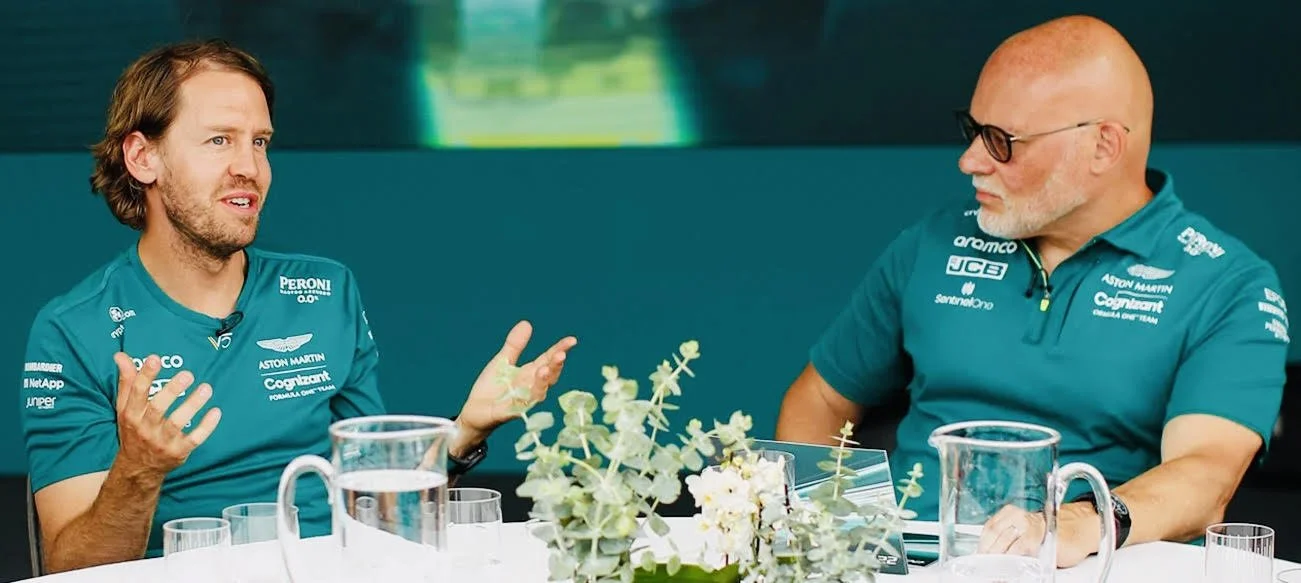
Matt Bishop with Sebastian Vettel in 2022
Matt has evidently played an important role as a confidant, supporter, and champion of LGBTQ+ people in the paddock, but at the outset of his career, he did not have any role models to look up to, at least not in F1. In this way, Matt acknowledges he was apparently a pioneer for openly LGBTQ+ people in the paddock — although there were likely more closeted people at the time who felt unable to come out.
Nonetheless, Matt named some notable figures who serve as a reminder that LGBTQ+ people have always been a part of motorsport, even if they were not welcomed to be open during their careers. The first Portuguese driver to race in F1, Mário de Araújo “Nicha” Cabral, came out as bisexual in 2009 aged 75. Mike Beuttler retired from Formula 1 in 1973 aged 34, moving to the USA where he sadly died from Aids in 1988.
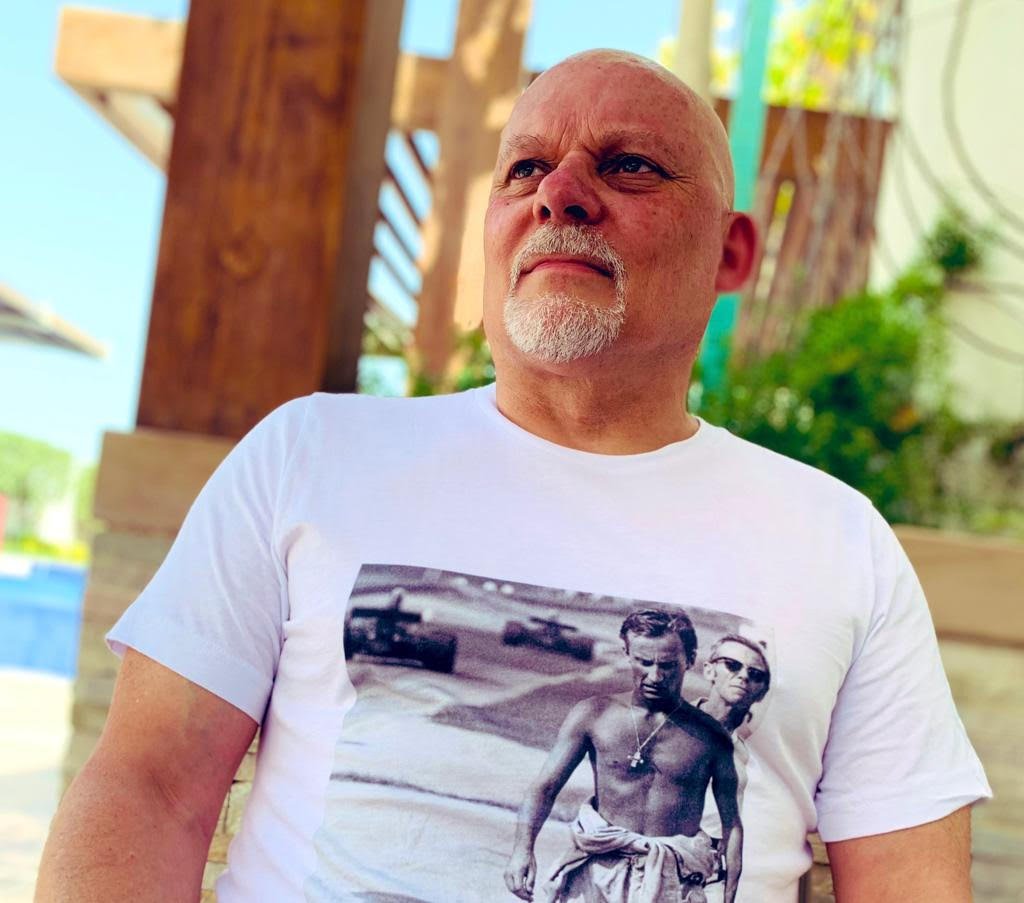
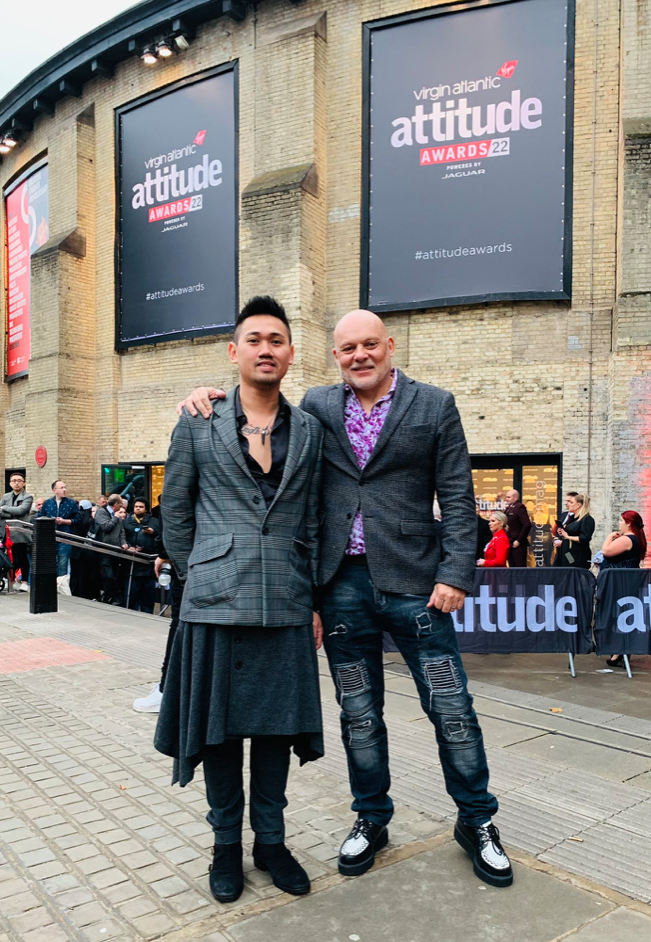
Matt Bishop wearing a Mike Beuttler (LGBTQ+ F1 driver) T-shirt, and with his husband Angel Bautista at the Attitude Awards at the Camden Roundhouse, both in 2022
Maria Grazia “Lella” Lombardi was the first and so far only woman to secure an F1 World Championship point – or rather half a point, because the race in which she achieved it, the 1975 Spanish Grand Prix, was brought to a premature end by a big accident, with the result that half points were awarded. She was also one of the first female racers in an open same-sex relationship. More recently, Ralf Schumacher came out as gay and in 2026 shared news of his engagement — a particularly positive role model, reflects Matt, because of his ongoing role as a media figure and pundit for Sky Deutschland.
Ultimately, Matt believes that in the future someone on their way up in F2, F3, F4 or karting will have the support systems around them to — whether in 5 or 10 years time — be able to celebrate an F1 win openly and publicly with their same-gender partner, and join the ranks of LGBTQ+ trailblazers in the sport.
Nowadays, Matt has a portfolio career working with his agency Diagonal Comms, continuing his journalism with a weekly F1 column in MotorsportMagazine.com, and hosting the F1 history podcast ‘And Colossally That’s History’.
Matt also volunteers for Young Lives vs Cancer, in homage to his late mother, who died of the disease in 2013. “Although she wasn’t a young person, she was very much a family person, and, although I don’t have kids, I can combine doing something that references my mother with helping me to do good for young people and children.”
The British Heart Foundation is another important aspect of Matt’s voluntary work, as someone impacted by heart disease and heart failure: “The NHS and BHF allow me to work full time and to live my best life despite my heart disease, which I inherited from my father. I work full-time and I go to the gym three times a week. The NHS rocks, and the BHF is a fantastic charity.”
The latest stage of Matt’s work with Racing Pride is to launch our official partnership with his PR, comms, social media and content creation agency, Diagonal Comms. The chief motivation for this is to deploy his team’s expertise and services in taking the story of Racing Pride forward, going wider and deeper to build on and enhance the work which has been done so far.
“I’ve always regarded comms as not just what you say about what you do, but what you actually do. In other words, you have to be a proper advisor to the board — whether for one of our current clients, for example Cadillac Formula One team, whether I was in house working for McLaren, or now working with Racing Pride. I think that Diagonal can assist in various ways to help Racing Pride achieve even more.”
